
Ideas to Action | AI at Waterline
At Waterline, delivering a great client experience starts with understanding our clients, anticipating their needs and following through on our commitments.
When one of our Mechanical Engineers identified an opportunity to improve how we prepare for and manage client conversations, we saw an opportunity to do things better.
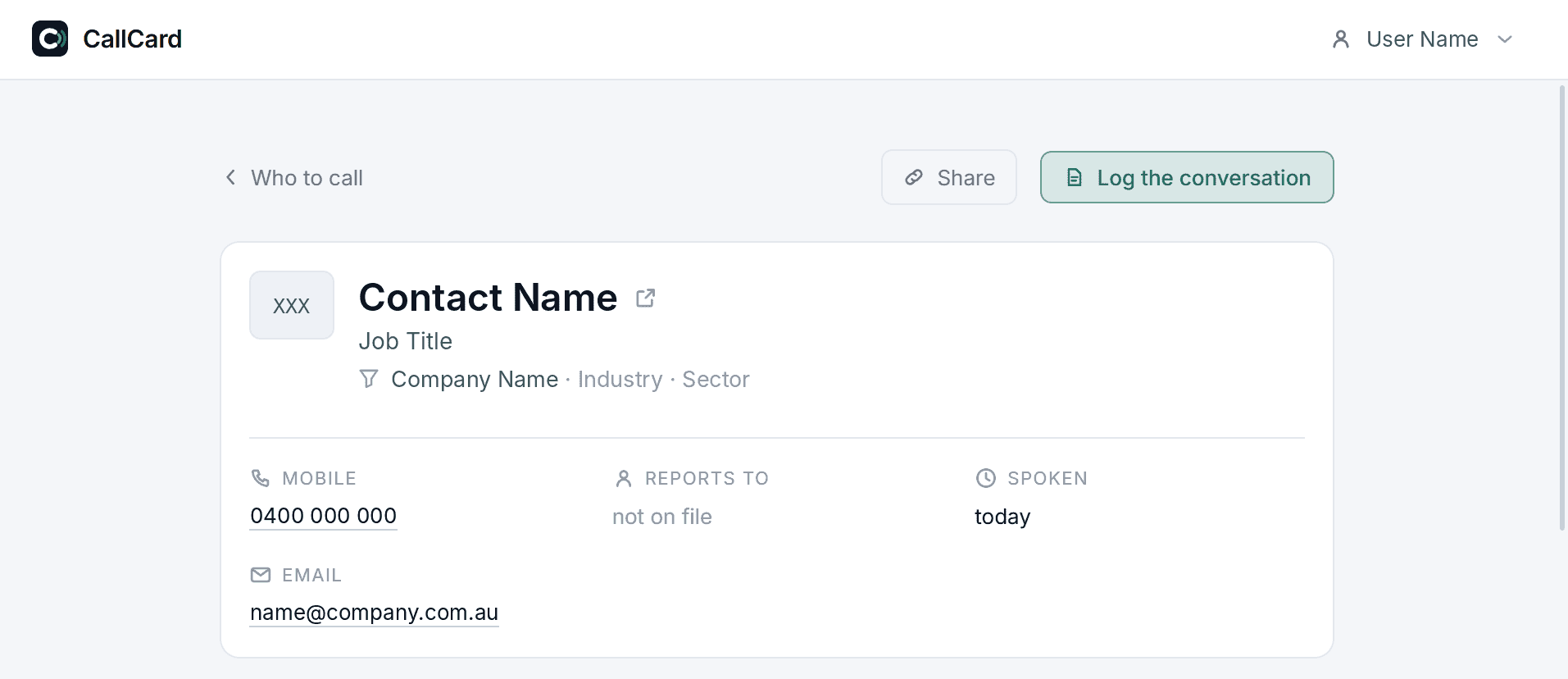
Working with our AI Ops and Automation Lead, that idea became CallCard, a tool designed to give our people better access to client information, improve continuity between conversations and create more time to focus on what matters most: our clients.
Here’s how one engineer’s idea became a practical AI solution to support a better client experience.
The gap: no single place to get across a client’s history
Waterline is growing. Our people are taking on more clients and projects, and new team members are joining. That’s all good news, but it brings a practical problem.
Before CallCard, getting across a client’s history before a call meant checking through the CRM, searching old emails and asking whoever knew the client best. Sometimes, there was no reliable way to get the whole picture at all.
Tim Power, one of our Mechanical Engineers, noticed the gap. Whether it was someone’s first call with a client or a catch-up on a long relationship, there was no single place to go. So he raised it with the team:
‘Before a call, I’d be jumping between emails, our CRM and colleagues to piece together what had happened in the past with a client. I figured if I was doing that, everyone else was, too.’
From idea to creation in a matter of weeks
Tim took the idea to Soobin Son, Waterline’s AI Ops and Automation Lead. Soobin joined Waterline in August to take problems and ideas like Tim’s and turn them into tools the whole team can use.
Together, they worked out what the tool needed to do, built it and rolled it out across the business in a matter of weeks.
‘Tim knew exactly what the problem was, because he lived it every week. That made my job easier. We built something around how the team actually works, not around what the technology can do.’
What CallCard does
CallCard supports our people
Before, during and after client conversations, helping us deliver a more connected and consistent experience.
Better-informed conversations
Our people can access relevant client history, previous interactions and engagement across the site, helping them understand the bigger picture before making contact
More meaningful engagement
With less time spent searching for information or taking notes, our people can focus on listening, asking better questions and understanding what clients need
Stronger follow-through
CallCard helps capture conversations, record actions and maintain continuity in our CRM, so commitments are visible and can be followed up
A more consistent experience
Whether a client is speaking with someone new or a long-standing contact, our team has better access to the information needed to provide informed and responsive service
For our clients, this means less repetition, better continuity and more productive conversations.
How Waterline approaches AI adoption
We’re not chasing trends. We’re putting automation where our people tell us it’ll help. CallCard shows what that looks like in practice.
- Start with a real problem
- Move quickly
- Keep people in control
- Free up time for clients
- Improve our clients’ experience
The best ideas come from the people who care about our clients
What makes CallCard particularly valuable isn’t just the technology. It’s how the idea came about.
An engineer recognised an opportunity to improve the way we serve our clients, raised it and worked with others to turn that idea into action.
It reflects the culture we’re building at Waterline. One where everyone has a role in delivering a great client experience, regardless of their discipline or position.
Because delivering exceptional engineering services isn’t only about technical expertise. It’s also about how well we listen, communicate, collaborate and deliver on our commitments. That’s what being client-focused means to us.
If you want to work somewhere your ideas turn into actions, see our careers page.
Client focus drives how we innovate
At Waterline, we believe innovation should solve real problems and create meaningful value for our clients and our people.
Our approach to AI and automation reflects that philosophy.
We start by understanding the problem, involve the people closest to it and develop practical solutions that improve how we work.
CallCard demonstrates five principles that guide our approach:
Start with the client
Understand how an improvement will create a better experience or outcome
Listen to our people
Encourage those closest to the work to identify opportunities
Turn ideas into action
Move quickly from identifying a problem to testing practical solutions
Keep people at the centre
Use technology to support our people, not replace the relationships and judgement our clients value
Continuously improve
Look for ways to make our services more responsive, efficient and valuable
Technology is an enabler. Our people, their expertise and their relationships with clients remain at the heart of how we deliver value.
What’s next
This is the first article in a series on how Waterline is putting AI and automation to work across our multi-discipline engineering teams. Follow Waterline on LinkedIn to see what’s next.
Want to see how our multi-discipline team supports operations like yours? Find out what we do.